

faunely editorial team · Updated · 15 min read
In short
The Merck Veterinary Manual gives a guinea pig lifespan of 5 to 8 years, and the RSPCA calls 5-6 years typical. A large UK study of veterinary records found a lower median age at death of about 4 years: 4.6 for females and 3.7 for males. The basics of care are daily vitamin C (at least 10 mg per kilogram of body weight for an adult), unlimited hay and the company of another guinea pig.
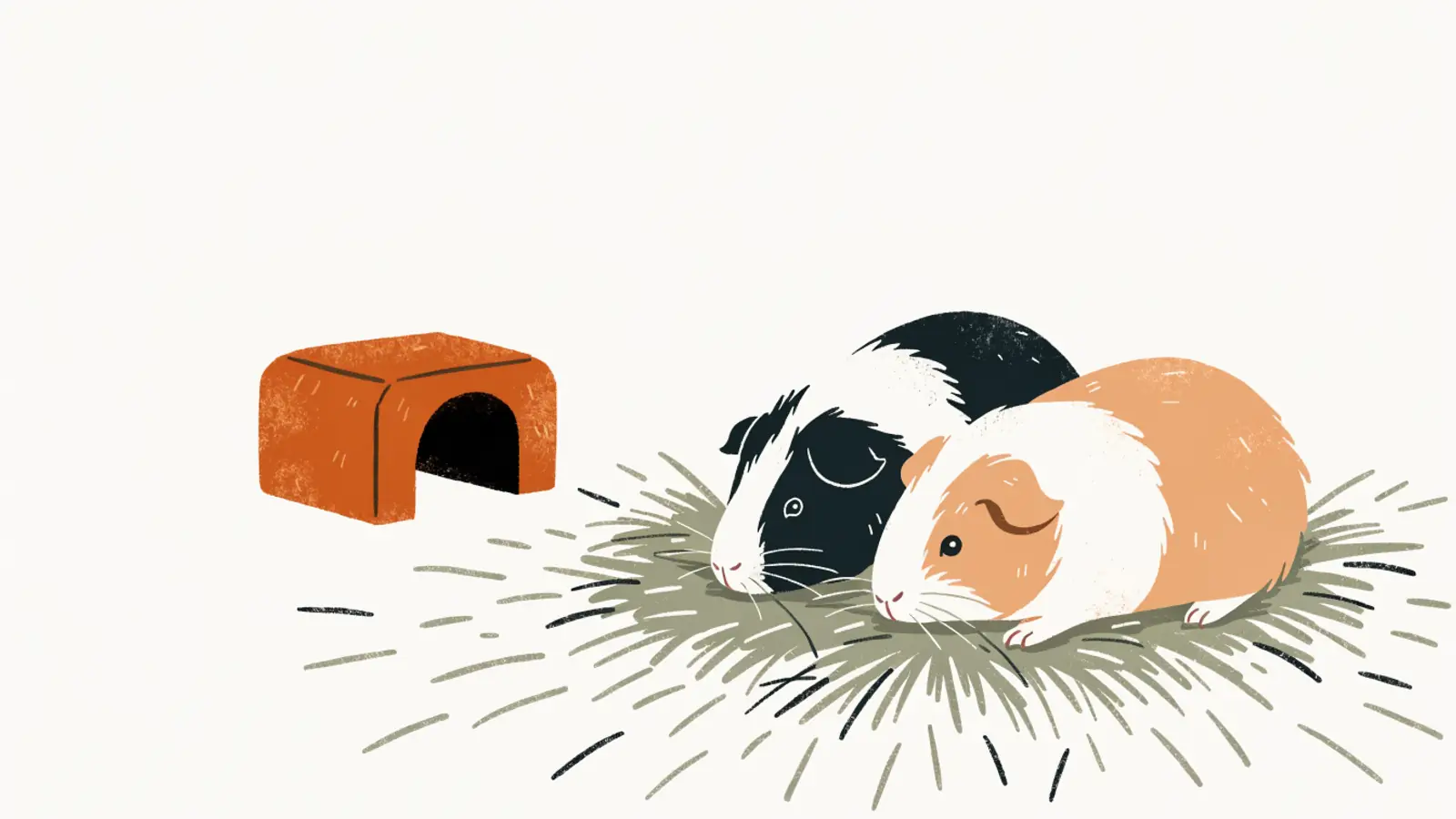
How long do guinea pigs live as pets?
The Merck Veterinary Manual lists a guinea pig lifespan of 5 to 8 years. The RSPCA, the UK animal welfare charity, says 5-6 years is typical and that some live longer. The authors of the VetCompass study described below cite a range of 4 to 9 years from earlier literature.
Clinic records give a more modest figure. The Royal Veterinary College (RVC) analysed records of 51,622 guinea pigs seen in UK primary-care practices in 2019. Across 757 recorded deaths, the median age was 4.03 years, half of the animals died between 2.6 and 5.4 years, and the oldest reached 10. Females outlived males: 4.58 years against 3.74.
The authors caution that guinea pigs brought to a vet may differ from the wider pet population. Their findings on causes are still useful to owners. Many of the common disorders were linked to husbandry: overgrown nails, corneal ulcers and obesity. Among recorded causes of death, the most frequent were anorexia, meaning the animal stopped eating (13.9% of deaths with a known cause), and collapse (9.8%).
Age brings its own risks. According to Merck, tumours are rare in young guinea pigs and more common after age 5, and hyperthyroidism usually appears in animals over 3.
Why guinea pigs need vitamin C, and how much
Like humans, guinea pigs cannot make their own vitamin C. They carry a mutated gene for L-gulonolactone oxidase, the enzyme other mammals use to turn glucose into ascorbic acid. The vitamin has to come from food every day, and the RSPCA notes that guinea pigs can store it only for short periods.
The veterinary edition of the Merck Manual (May 2026 review) puts the adult requirement at 10 to 25 mg per kilogram of body weight per day. Growing, pregnant, lactating and sick animals need 30 mg/kg or more. Merck's pet owner edition gives the lower bound: at least 10 mg/kg, and 30 mg/kg for a pregnant sow. For a 1 kg guinea pig that means 10 to 25 mg a day.
Guinea pig pellets contain vitamin C, but it breaks down with heat, light and moisture. Merck warns that pellets can lose a substantial share within a few months, and the PDSA advises storing them somewhere dry, cool and dark and using them within three months of purchase. Rabbit pellets are no substitute because they do not carry enough vitamin C for guinea pigs. Vegetables high in ascorbic acid include red and green bell peppers, tomatoes, kale, parsley, beet greens and spinach.
Merck and the PDSA both advise against adding vitamin C to drinking water. The water has to be changed often, and the taste can put a guinea pig off drinking.
Signs of vitamin C deficiency (scurvy)
Without vitamin C the body cannot build normal collagen, blood vessels weaken, and bleeding starts, including into the joints and gums. Merck lists these signs:
- refusing food or struggling to pick it up
- a rough, dull coat
- lameness or weak legs
- swollen joints and pain on handling
- slow wound healing
- malocclusion, because the teeth lack the collagen that anchors them
Growing, pregnant, lactating and sick guinea pigs show signs sooner. Merck describes a typical history: the animal was fed rabbit pellets, old pellets or food without a stabilised form of the vitamin. A vet treats the deficiency, and treatment includes fixing the diet.
What to feed a guinea pig at home
Guinea pigs are strict herbivores with a gut built for coarse, high-fibre food. An adult's diet rests on grass hay such as timothy or orchard grass, available at all times. The PDSA puts hay and grass at 85-90% of the diet, and Merck's veterinary edition offers a volume guide: each day a guinea pig should eat its own body size in hay. Chewing hay wears the teeth down, and the fibre keeps gut bacteria healthy. Alfalfa hay and pellets are only for guinea pigs under 6 months, pregnant or lactating sows; for other adults alfalfa carries too much calcium.
Pellets are a measured extra, and the sources disagree on the portion. The PDSA recommends one tablespoon per adult guinea pig a day, Merck's owner edition about two tablespoons, and Merck's veterinary edition one to two teaspoons. All of them treat pellets as an addition to hay. Merck links too many carbohydrate-rich pellets to diarrhoea, gas and bloating. Choose uniform, grass-based pellets; the PDSA advises against muesli-style mixes because guinea pigs pick out the pieces they like.
Vegetables and leafy greens go in daily. The PDSA suggests about a cup per guinea pig, with five or six different kinds, and Merck's veterinary edition one to two cups. In a 2025 study cited by Merck, guinea pigs offered 7 to 10 or more types of produce were less likely to develop urinary stones. Merck's owner edition advises feeding parsley, kale and spinach only occasionally because they are high in calcium, and excess calcium is linked to bladder stones. Remove uneaten fresh food after a few hours before it spoils.
Fruit and carrots are where advice splits most. Merck's veterinary edition says berries, oranges, carrots and sugary treats should not be fed. Merck's owner edition and the PDSA allow a small piece of fruit as a treat, and the PDSA sets the frequency at once every week or two. Both sides agree that fruit is high in sugar and less is better.
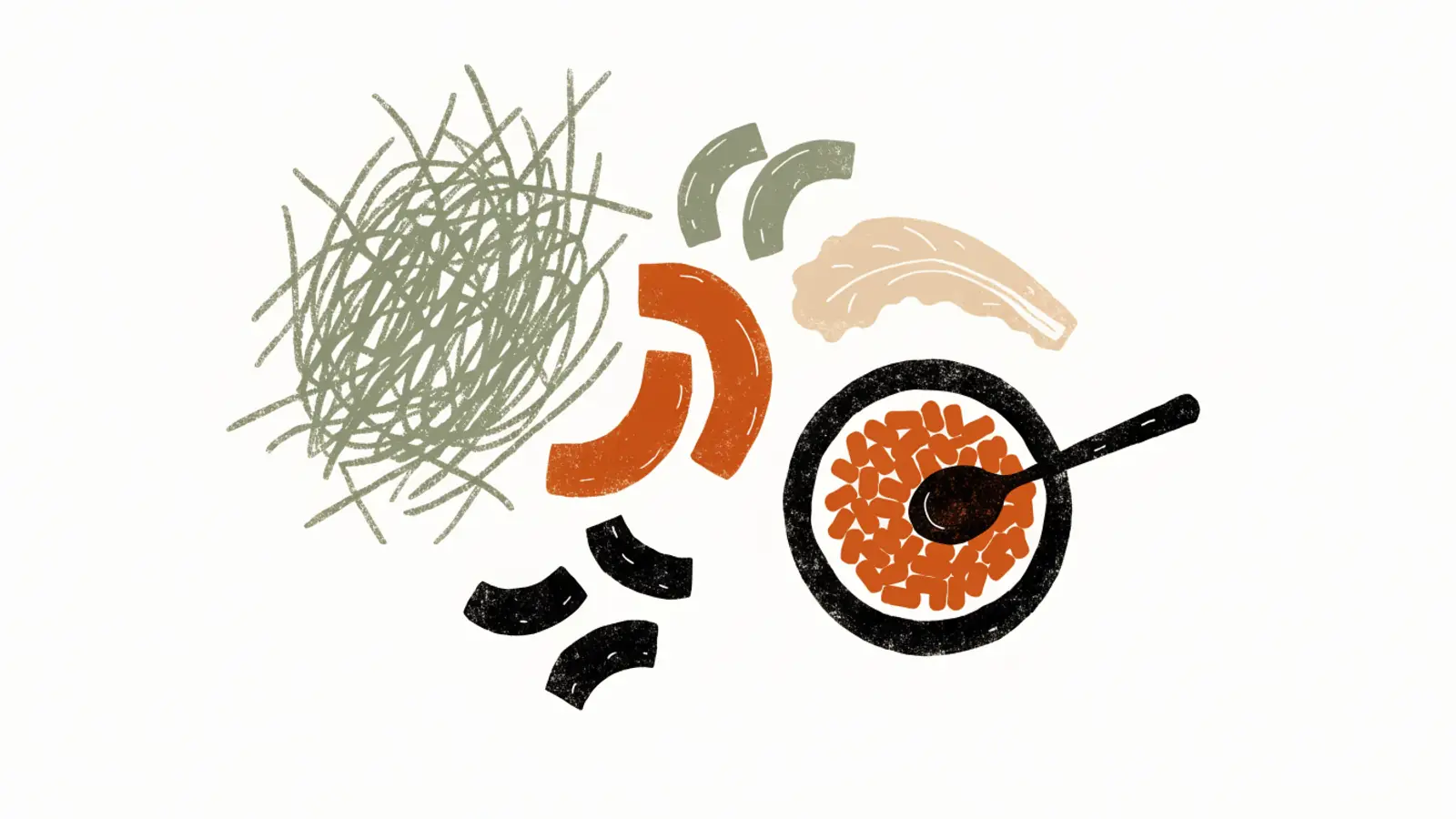
| Food | Share or portion | How often | What to watch |
|---|---|---|---|
| Grass hay | 85-90% of the diet (PDSA); roughly the guinea pig's own body size per day (Merck) | At all times; the rack should never run empty | Alfalfa hay only under 6 months, in pregnancy and lactation |
| Guinea pig pellets | 1 tablespoon (PDSA); about 2 tablespoons (Merck owner edition) | Daily, measured | Use within 3 months; no rabbit pellets or muesli mixes |
| Vegetables and leafy greens | About a cup a day, 5-6 kinds (PDSA) | Daily | Bell pepper, romaine, cucumber, tomato; remove leftovers after a few hours |
| High-calcium greens | A small part of the vegetable portion | Not every day | Parsley, kale, spinach: excess calcium is linked to stones |
| Fruit and carrots | A small piece | Once every 1-2 weeks (PDSA) or not at all (Merck veterinary edition) | High in sugar; can upset digestion |
| Water | Unlimited | Always available, changed often | Guinea pigs drink more from a bottle than from a bowl (Merck) |
Foods guinea pigs should never eat
The PDSA lists foods that are poisonous, upset the stomach or pose a choking risk: potatoes and their skins, onion, garlic, chives, mushrooms, avocado, rhubarb and its leaves, tomato leaves and vines (the fruit itself is fine), and iceberg lettuce. Merck describes iceberg lettuce as mostly water.
Brightly coloured sugary treats from pet shops are also out: the PDSA says they harm teeth and digestion. Lawnmower clippings ferment quickly and should not be fed either. If you know or suspect that your guinea pig ate something toxic, call a vet.
Change the diet gradually. Merck explains that guinea pigs form food preferences early and can refuse new foods, so a newly adopted guinea pig should first get the food it is used to, with new items added slowly.
Can a guinea pig live alone?
The RSPCA recommends keeping a guinea pig with at least one other friendly guinea pig unless a vet or clinical animal behaviourist advises otherwise. Guinea pigs left alone for long periods can develop abnormal behaviour and may suffer. A guinea pig that has to live alone needs daily interaction with its owner.
Good combinations, according to the RSPCA, are a neutered male with one or more females, two females, or brothers raised together. Unrelated adult males can be introduced, though it may take several attempts. The RSPCA says neutering a male does not change his behaviour or stop fighting; personality matters more than sex.
Introduce guinea pigs gradually and under supervision, ideally somewhere new to both. The enclosure needs enough hides, food and water for everyone. Merck's veterinary edition specifies more hiding spots than animals, for example at least four hides for three guinea pigs. Females reach sexual maturity at about 2 months and males at about 3, so unneutered males and females should be separated by then. Do not house guinea pigs with rabbits: Merck warns that some diseases spread between the two species.
What size cage does a guinea pig need?
Merck notes that many commercial cages are too small, especially for two animals. The veterinary edition (2026) sets a minimum of 7.5 square feet, about 0.7 m², for one guinea pig, plus 2 to 4 square feet (0.19 to 0.37 m²) for each additional one. That works out to roughly 0.9 to 1.1 m² for a pair. The owner edition gives a slightly smaller figure, 7 square feet (about 106 by 61 cm), with a height of about 46 cm.
The floor must be solid. Wire mesh injures the feet and leads to pododermatitis, a painful infection of the foot pads. Merck's owner edition recommends paper bedding or kiln-dried pine; cedar and raw pine irritate the airways, sawdust is a respiratory hazard, wood shavings can cause a blockage if eaten, and cat litter is unsuitable. Exercise wheels injure guinea pigs. Provide at least one hide or box for sleeping and daily supervised time out of the cage in a room cleared of cables.
Merck's owner edition puts the comfortable temperature at 18 to 24 °C, and the veterinary edition allows up to 26 °C at 30 to 60% humidity. Keep the cage out of direct sun and draughts. Spot-clean daily and do a full clean once a week.
Guinea pig teeth and nails: checks and trimming
All of a guinea pig's teeth grow throughout life, including the premolars and molars at the back. Their length stays normal because opposing teeth wear each other down during chewing. Merck links most malocclusion to diet, namely a lack of vitamin C or fibre. Trauma, such as chewing on cage bars, and genetics also play a part. If an adult guinea pig's incisors suddenly overgrow, the problem is often in the back teeth, and a vet needs to examine them.
Signs of dental disease include drooling, eating less or not at all, difficulty chewing or swallowing, and weight loss. The RSPCA advises checking the front teeth and nails every week. Only a vet should correct overgrown or misaligned teeth.
Overgrown nails were the most common problem in the UK study, recorded in 26.6% of guinea pigs within a year. Merck recommends trimming nails every few weeks with clippers made for small animals, starting young so the guinea pig gets used to it. Each nail has a blood vessel, the quick; in dark nails a bright light shows where it ends. Cut about 3 mm beyond the quick, and if it bleeds, stop the bleeding with styptic powder.
Common guinea pig illnesses and when to see a vet urgently
After overgrown nails, the UK sample most often showed dermatophytosis (ringworm, 6.0%) and corneal ulcers (5.0%). By disorder group, skin conditions led (15.6%), followed by eye problems (13.7%) and upper respiratory disease (7.6%). Males more often had dental disease and bite wounds, females eye conditions.
Merck's veterinary edition adds several other common conditions. Urinary stones are frequent, and blood in the urine is often the first sign. Ovarian cysts are the most common reproductive disorder in sows. Hyperthyroidism shows as weight loss despite a normal or increased appetite.
Guinea pigs do not need vaccinations, according to Merck. Merck and the RSPCA recommend a check-up at least once a year with a vet experienced in the species. Give medicines only as a vet prescribes: the RSPCA warns that drugs meant for other animals are dangerous to guinea pigs.
Do not wait a day if your guinea pig has stopped eating, is eating noticeably less or is passing fewer droppings. The RSPCA advises contacting a vet immediately because the animal could be seriously ill, and anorexia was the most frequently recorded cause of death in the UK study. Breathing difficulty, drooling, a swollen belly, blood in the urine or a head tilt also need a vet urgently.
Guinea pigs hide illness until they are very sick, so Merck advises seeing a vet promptly for any of these signs:
- loss of appetite or weight
- hunched posture or limping
- a swollen belly
- changes in the coat, hair loss, sores or flaky skin
- difficulty breathing, discharge from the eyes or nose
- lethargy or lack of response
- diarrhoea
- drooling, overgrown teeth or swelling around the jaw
- blood in the urine
- head tilt (a possible ear infection)
How to keep track of guinea pig care
Weight loss appears on the warning lists from Merck and the PDSA, and in dental disease or hyperthyroidism it can be one of the first visible changes. The weekly tooth and nail check that the RSPCA recommends pairs well with weighing on a kitchen scale in grams at the same time of day. Merck gives adult weights of 700 to 900 g for females and 900 to 1,200 g for males, and the median adult weight in the UK sample was 1.05 kg. These sources set no specific threshold of loss that calls for a vet, so compare each guinea pig with its own earlier records: a steady drop without a change in diet is worth showing to a vet.
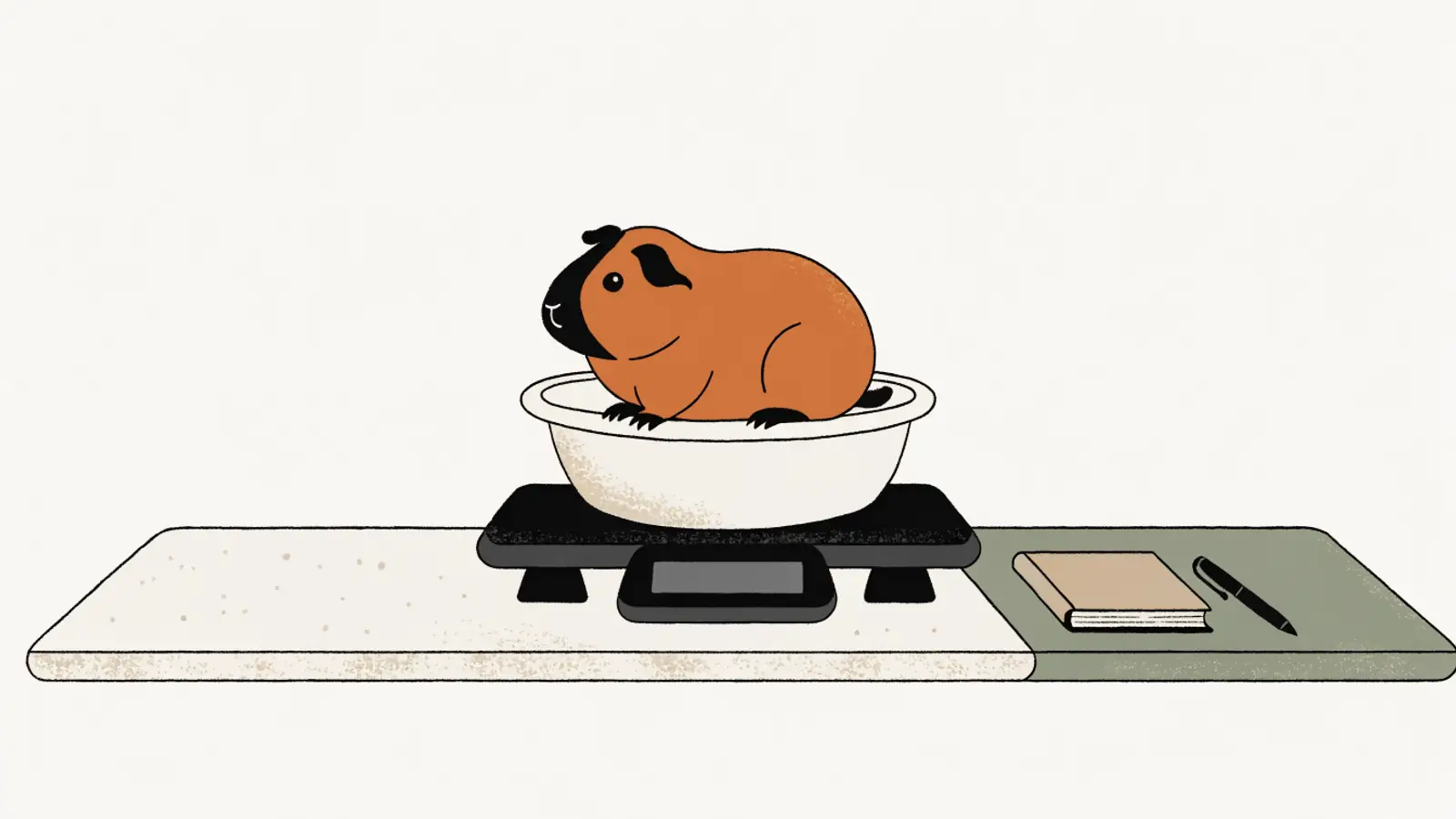
What to record:
- each guinea pig's weight once a week
- the date of each nail trim, with the next one due in a few weeks
- the date you opened the bag of pellets, so it is used within three months
- the date of the last vet check-up, with the next one due a year later
- any change in appetite or droppings, with the date and time
In faunely you can set these up as recurring tasks: the Telegram bot reminds you about weighing or nail trims, and each recorded weight goes onto a chart.
Common questions
How many years do pet guinea pigs live?
The Merck Veterinary Manual gives 5 to 8 years, and the RSPCA calls 5-6 years typical. In a UK study of veterinary practices the median age at death was about 4 years, with females outliving males. The oldest guinea pig in that sample reached 10.
What can I feed my guinea pig every day?
Every day a guinea pig needs unlimited hay, a measured portion of guinea pig pellets and about a cup of five or six kinds of vegetables and greens (PDSA). Bell pepper, romaine and cucumber work well. Fresh water must always be available.
Can I put vitamin C in my guinea pig's water?
Merck and the PDSA advise against it. The vitamin breaks down in water, the water needs frequent changing, and the altered taste can reduce drinking. A guinea pig gets vitamin C from fresh pellets and vegetables; ask your vet whether a supplement is needed.
How often should I trim my guinea pig's nails?
Merck recommends trimming every few weeks, and the RSPCA suggests checking nail length weekly. Cut only the tip and avoid the blood vessel inside the nail. If you are unsure, a vet can trim them for you.
Is it okay to keep just one guinea pig?
The RSPCA recommends keeping a guinea pig with at least one companion unless a vet advises otherwise. Two females, a neutered male with females, or brothers raised together are good pairings. A guinea pig living alone needs daily interaction with its owner.
Do guinea pigs need vaccinations?
According to Merck, guinea pigs do not need vaccinations. Instead, an annual check-up with a vet who treats small mammals is recommended. The vet checks teeth, nails, weight and skin.
Keep the schedule in faunely
Add your pet, mark what has been done, and faunely will remind you about the next step in Telegram.
Start a pet diarySources
- Physiological Data for Guinea Pigs. Merck Veterinary Manual
- Housing and Nutrition of Guinea Pigs. Merck Veterinary Manual
- Noninfectious Diseases of Guinea Pigs. Merck Veterinary Manual
- Diet for a Guinea Pig. Merck Veterinary Manual
- Providing a Home for a Guinea Pig. Merck Veterinary Manual
- Routine Care of Guinea Pigs. Merck Veterinary Manual
- Keeping Guinea Pigs Together. RSPCA
- Guinea Pig Health & Welfare Tips. RSPCA
- Your guinea pigs' diet. PDSA
- Demography, commonly diagnosed disorders and mortality of guinea pigs under primary veterinary care in the UK in 2019: a VetCompass study. PLOS One / Royal Veterinary College
More articles
- How long hamsters live and how to care for themSyrian hamsters live 18-36 months, Russian dwarfs about 2 years. A five-species table, cage size, bedding depth, wheel, diet, illness and weighing.
- Rabies vaccination for dogs and cats in Russia: timing, legal duty, paperworkWhether Russian Order No. 705 makes the rabies shot mandatory, the age for the first dose, booster interval, pet passport entries and when titers are needed.
- Vaccination schedule for puppies and adult dogsFirst puppy shot at 6-8 weeks, last dose of the series at 16 weeks or later, another at 26 weeks. Rabies in Russia from 3 months, then yearly.