

faunely editorial team · Updated · 15 min read
In short
Puppies get their first vaccine at 6-8 weeks, then a repeat every 2-4 weeks until they are 16 weeks old or older. The World Small Animal Veterinary Association (WSAVA) advises one more dose at 26 weeks, roughly 6 months. In Russia, rabies vaccination starts at 3 months and is repeated every year. Adult dogs need the core distemper, hepatitis and parvovirus vaccine no more often than every 3 years, and leptospirosis every year.
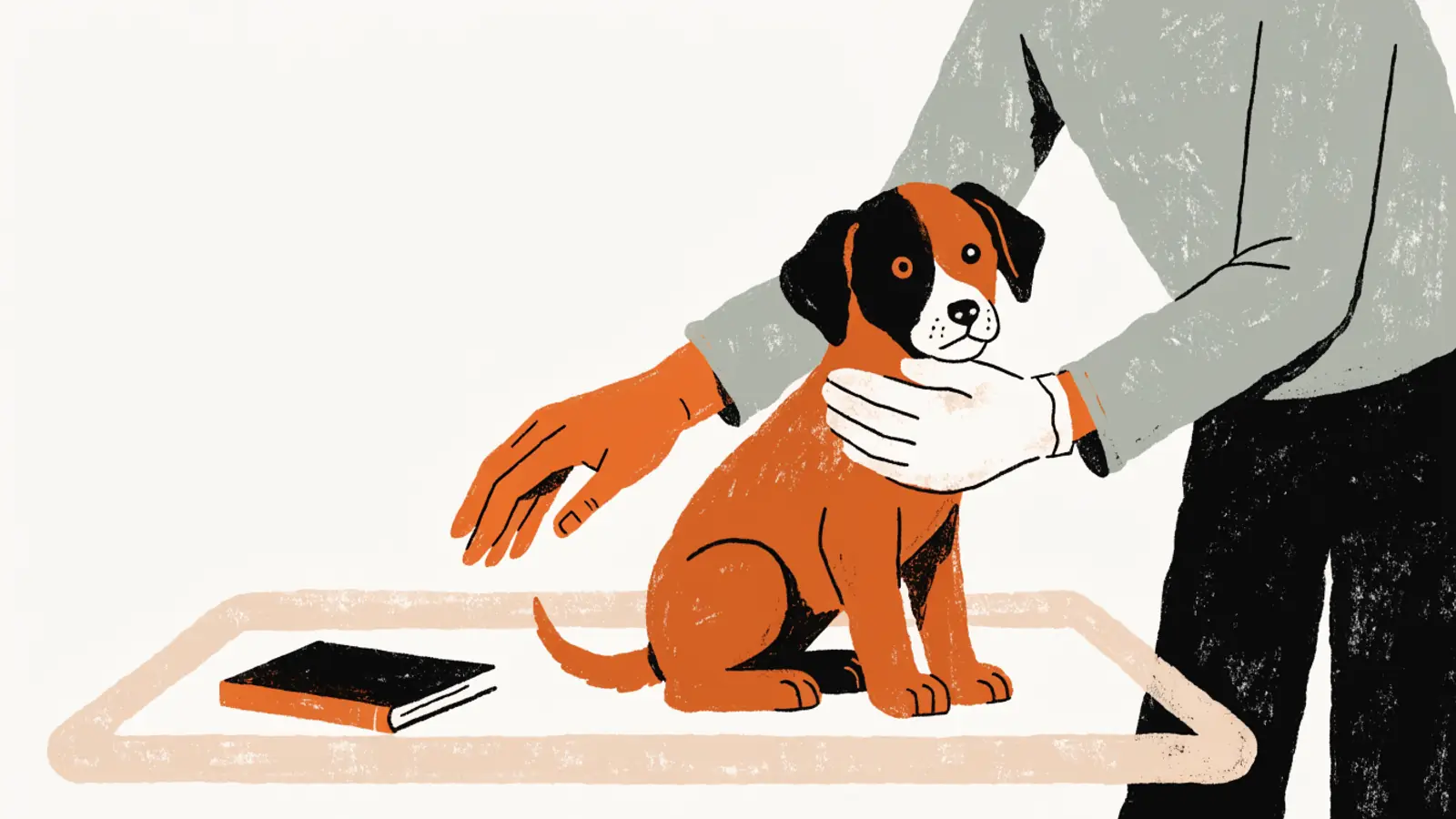
When do puppies get their first shots?
The 2024 WSAVA guidelines put the first core dose at 6 to 8 weeks, and never before 6 weeks. The core vaccine covers three viruses: canine distemper, canine adenovirus (infectious hepatitis) and canine parvovirus. The American Animal Hospital Association (AAHA) 2022 guidelines set the same frame: at least three doses between 6 and 16 weeks, 2 to 4 weeks apart.
WSAVA advises against vaccinating more often than every 2 weeks. The total number of doses depends on when the series starts and the interval chosen. Start at 8 weeks with 4-week gaps and the doses land at 8, 12 and 16 weeks. Start at 6 weeks with 3-week gaps and you get 6, 9, 12 and 15 weeks, so one more dose is needed at 16 weeks or later.
If the breeder has already vaccinated the puppy, ask for the vet passport or a note with dates and vaccine names; the next date is counted from them.
Why does a puppy need several shots in a row?
A newborn puppy gets its mother's antibodies from colostrum. According to WSAVA, 95% or more of these antibodies arrive this way, absorbed during the first 24 hours after birth and mostly in the first 4. Maternal antibodies protect the puppy early on, but they also neutralise the vaccine before the puppy's own immune system can respond.
Maternal antibody levels halve roughly every 9 to 10 days. In most puppies they drop low enough for the vaccine to work by 8 to 12 weeks. In some they persist, and those puppies cannot respond until 12 weeks or later. The spread is wide, between litters and within a single litter.
The stretch when maternal antibodies are too low to protect but still high enough to block the vaccine is called the window of susceptibility. Without a blood test nobody can tell when it opens or closes. That is why puppies get a series: each dose tries to catch the moment antibodies have fallen. WSAVA points out that these repeat puppy doses are not boosters in the usual sense.
The most important dose of the series is the one given at 16 weeks or later. By then maternal antibodies no longer interfere in the vast majority of puppies. Some vaccine labels allow the series to finish at 10 or 12 weeks. WSAVA disagrees: part of the research behind an early finish was skewed because the puppies were housed together and passed vaccine virus to each other.
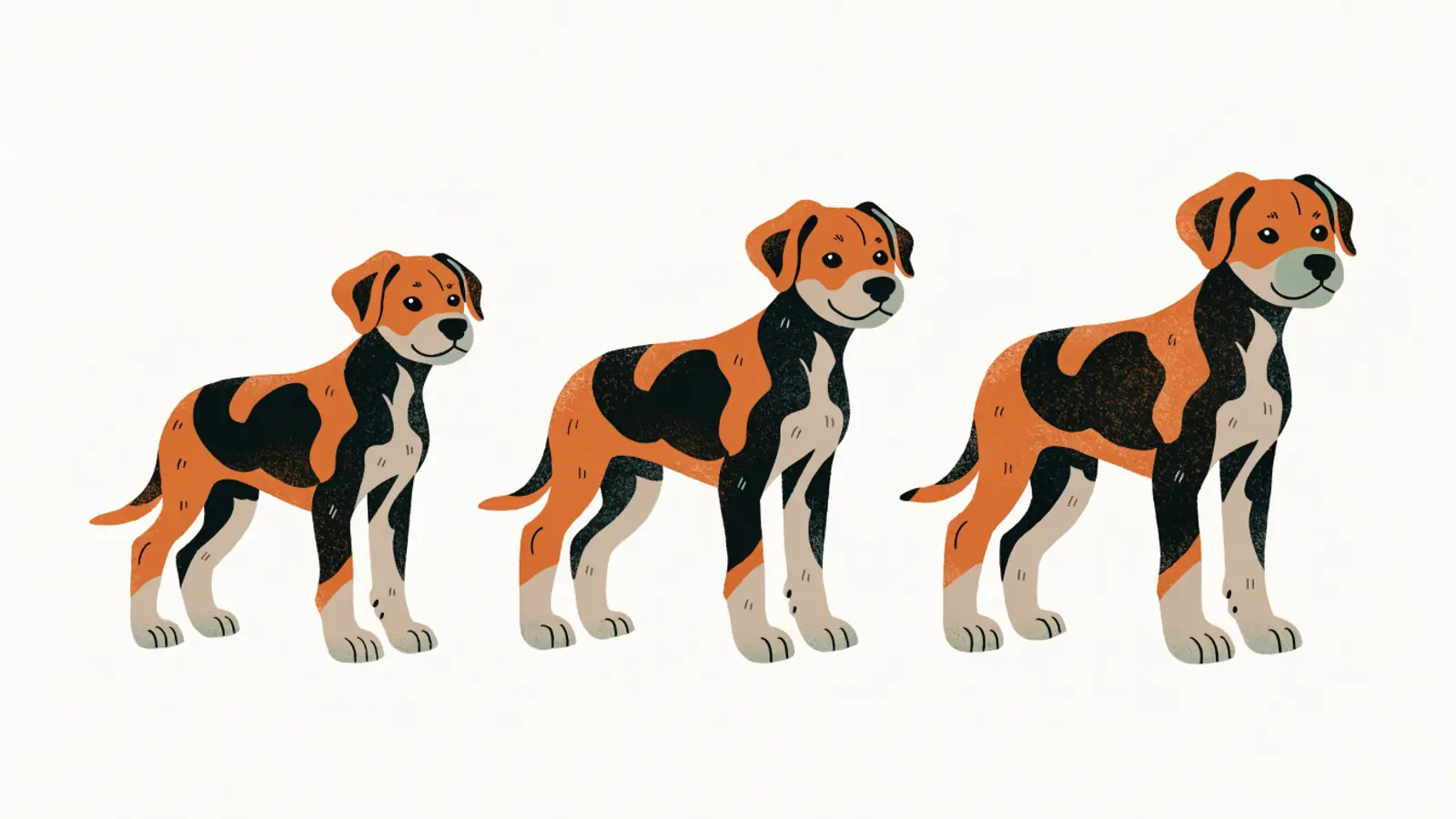
Puppy vaccination schedule month by month, up to one year
The sequence below follows WSAVA 2024 and Russian rabies requirements. The exact weeks for your puppy depend on the vaccine and the vet's decision.
First day
The puppy suckles colostrum and receives maternal antibodies, which set how well protected it is in the first weeks.
6-8 weeks
First dose of the core vaccine against distemper, adenovirus and parvovirus. Never given before 6 weeks.
8-12 weeks
Core vaccine repeated after 2-4 weeks. Leptospirosis usually starts at 8 weeks per WSAVA and at 12 weeks per AAHA, with the second dose 2-4 weeks later.
12 weeks (3 months)
Rabies vaccination starts at this age in Russia. WSAVA notes that many countries do not give the first rabies dose before 12 weeks.
16 weeks or later
Last dose of the puppy series. Where infection risk is high, WSAVA allows extending the series to 18-20 weeks.
20 weeks or later
Optional antibody blood test, at least 4 weeks after the last dose. If the puppy is protected, the 26-week shot is not needed.
26 weeks (about 6 months)
One more core dose for puppies that failed to respond at 16 weeks because maternal antibodies were still present.
12 months
Annual check-up, rabies revaccination and the yearly vaccines (leptospirosis and others as indicated).
| Age | Vaccine | Based on |
|---|---|---|
| 6-8 weeks | Core: distemper, adenovirus, parvovirus | WSAVA 2024, AAHA 2022 |
| every 2-4 weeks | Core repeated until 16 weeks | WSAVA 2024 |
| 8-12 weeks | Leptospirosis, 2 doses 2-4 weeks apart | WSAVA (from 8 weeks per label), AAHA (from 12 weeks) |
| from 3 months | Rabies | Rosselkhoznadzor, vaccine label |
| 16 weeks or older | Last dose of the puppy series | WSAVA 2024 |
| 26 weeks | Core booster, or antibody test from 20 weeks | WSAVA 2024 |
| 1 year | Rabies, leptospirosis, lifestyle vaccines | Rosselkhoznadzor, WSAVA |
Schedules differ at this point. Some vaccine labels allow the series to end at 10-12 weeks, and WSAVA itself used to advise the first booster at 12-16 months. Now WSAVA recommends a 26-week dose instead, while AAHA accepts a booster within a year of the series. WSAVA's case for 26 weeks: the number of doses stays the same, but a puppy that failed to respond at 16 weeks spends far less time unprotected.
Which vaccines does every dog need, and which depend on lifestyle?
WSAVA splits vaccines into core and non-core. Core vaccines are for every dog wherever it lives: distemper, adenovirus and parvovirus. Rabies is core wherever the disease occurs, even where the law does not demand it. Russia is one of those countries.
In the 2024 version WSAVA moved leptospirosis to core as well, on condition that the disease occurs in the region, the serogroups behind it are known and a suitable vaccine exists. AAHA treats leptospirosis as core for all dogs in North America and notes that small urban dogs exposed to rodents get it often. Rospotrebnadzor, the Russian consumer health agency, lists leptospirosis among the vaccines vets recommend for dogs.
Non-core vaccines are chosen by how the dog lives:
- parainfluenza and Bordetella (kennel cough agents): for dogs in boarding kennels, at shows and in group classes;
- Lyme disease (Borrelia): only where vector ticks are common, before the tick season starts; tick control remains the main protection;
- leishmaniosis: in regions where it occurs, three doses 3 weeks apart, the first after 4 months of age.
WSAVA does not recommend the canine coronavirus vaccine, since there is little evidence the virus alone harms adult dogs. Non-core vaccines last about a year, unlike the core ones, so they are repeated annually.
Rabies shots for puppies: what Russian law requires
Rabies vaccination is mandatory for dogs and cats in Russia. The rabies veterinary rules were approved by Order No. 705 of the Russian Ministry of Agriculture on 25 November 2020 and remain in force until 1 March 2027. Clause 8 says dogs and cats are vaccinated by veterinary specialists with rabies vaccines "according to their instructions for use". The order itself sets no age or interval; those come from the label of the specific vaccine.
In practice, regional offices of Rosselkhoznadzor, the federal veterinary service, state that pets are vaccinated against rabies from 3 months of age and then every year. State veterinary stations and private clinics both do it, and the record goes into the vet passport. Without it a dog is not admitted to shows, competitions or hunting, and travel within Russia requires a valid vaccination entry in the passport.
WSAVA puts local law first on this point. Rabies vaccines come with 1-year and 3-year immunity, but if the law requires a yearly shot, that is what applies. Timing, the veterinary certificate and travel with pets are covered in a separate article on the rabies vaccine.
How often should an adult dog be vaccinated?
A dog that has responded properly to the core vaccine stays immune for many years. Under WSAVA, after the 26-week dose the next core shot is due at 3 years of age and then no more often than every 3 years, for life. WSAVA advises against stopping vaccination in older dogs. AAHA gives the same interval: a booster within a year of the puppy series, then every 3 years.
| Vaccine | How often | Notes |
|---|---|---|
| Distemper, adenovirus, parvovirus | No more often than every 3 years | For modified live and recombinant vaccines; inactivated ones last less |
| Rabies | Yearly in Russia | Interval per label; Rosselkhoznadzor describes yearly vaccination |
| Leptospirosis | Yearly | Immunity lasts 12-14 months, up to about 18 |
| Parainfluenza, Bordetella | Yearly | Depends on lifestyle |
| Lyme disease | Yearly, before tick season | High-risk areas only |
So an adult dog may be vaccinated every year, with a different set of vaccines each time. The combined core vaccine comes every third year, rabies and leptospirosis every year.
Unknown history or a missed booster
For an adult dog with no known vaccination history, WSAVA advises one dose of the live core vaccine and one rabies dose. Leptospirosis takes two doses 2-4 weeks apart; one is not enough. A healthy dog can receive all the vaccines it needs in a single visit, at different sites and never mixed in one syringe.
If leptospirosis or another yearly vaccine lapsed for a long time, WSAVA advises starting over with two doses 2-4 weeks apart. A dog that once responded properly to the core vaccine does not need to repeat the series.
Quarantine after vaccination and the first walks
WSAVA and AAHA guidelines contain no fixed "quarantine" after a routine puppy shot. Advice to keep a puppy indoors for a set number of days after a shot comes from clinic habit and the labels of particular vaccines, and the periods vary. The Russian rabies rules mention 60 days of isolation after vaccination, but only inside a rabies outbreak zone under quarantine, not after routine shots.
WSAVA and the American Veterinary Society of Animal Behavior (AVSAB) take a different line: socialisation should not wait until the series is complete. The key period for it is the first three months of life. AVSAB says puppies can start puppy classes at 7-8 weeks, provided they had at least one set of vaccines no less than 7 days before the first class and a first deworming.
The risk has been measured. In a 2013 study, 279 puppies under 16 weeks that had been vaccinated at least once attended group classes, and none was suspected of or diagnosed with parvovirus. Vaccinated puppies in classes got sick no more often than those kept at home.
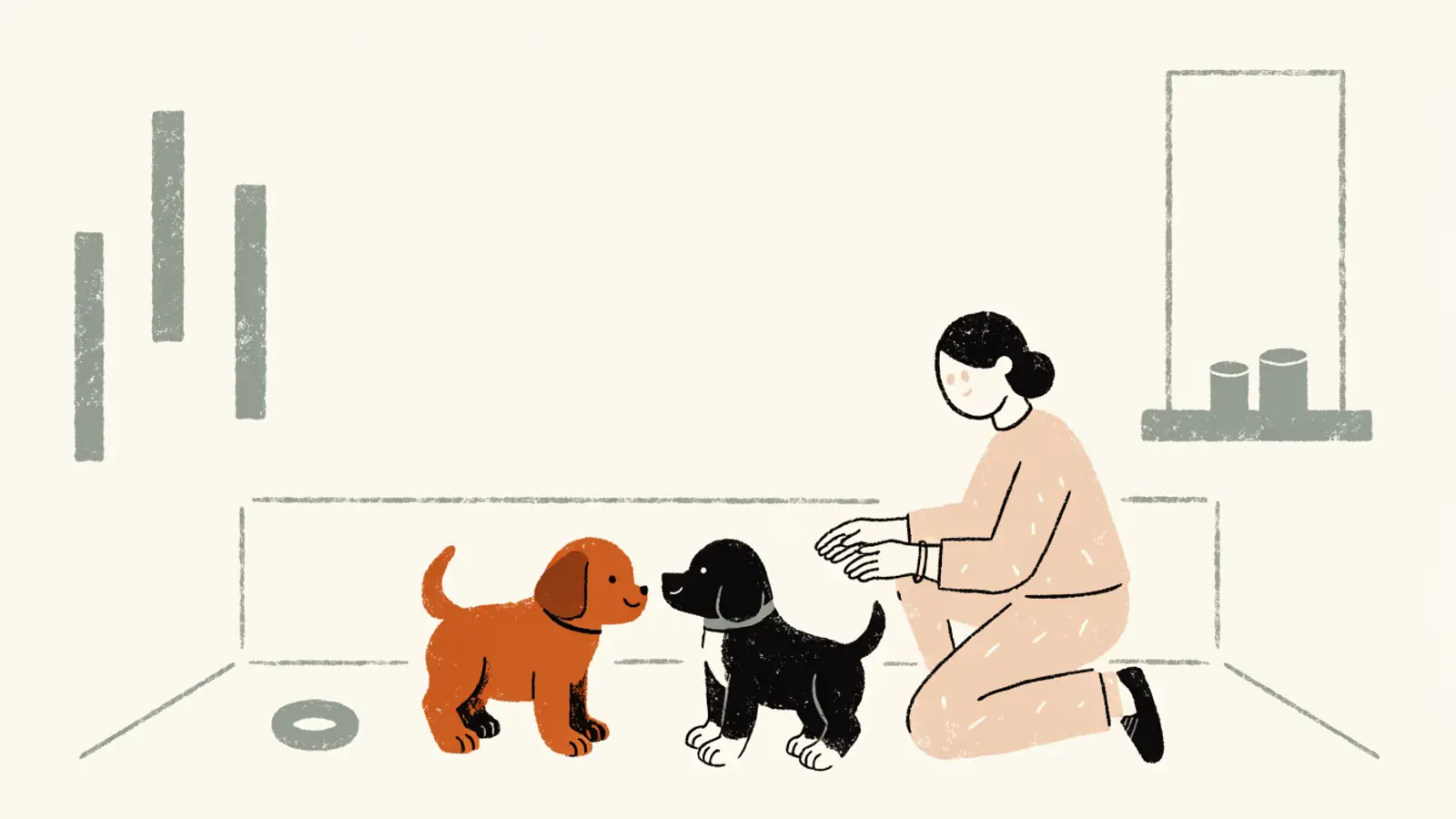
Until the series is finished, WSAVA and AVSAB advise:
- contact only with healthy puppies and fully vaccinated adult dogs;
- rooms where the floor is easy to wash and disinfect;
- no dog parks or places with many dogs of unknown vaccination status.
Rabies runs on a different clock. Rospotrebnadzor says an animal is protected 28 days after its first rabies shot. For travel, Rosselkhoznadzor refers to 21 days for immunity to form and issues a veterinary certificate no earlier than 20 days after vaccination.
Is the schedule different for small, medium and large breeds?
No. WSAVA and AAHA use one schedule for dogs of every size: the same timing, the same interval and the same dose. Manufacturers recommend an identical dose for a puppy and an adult, for a toy terrier and a Great Dane, and WSAVA does not encourage vets to deviate from that.
WSAVA advises against giving small dogs a half or quarter dose. Small dogs react to vaccines more often, especially when they receive several vaccines in one visit. In the US data the highest risk was in dogs under 5 kg given multiple vaccines at once. Breed mattered more than weight, though: Dachshunds, Boston terriers, miniature Pinschers, French Bulldogs and Havanese reacted more often than other dogs.
Large and giant dogs have a different quirk: on average they respond to the rabies vaccine less strongly than small dogs. In one study, heavier dogs had lower parvovirus and distemper antibody levels, yet dogs of all sizes reached protective levels. Because of reaction risk, AAHA suggests giving the first leptospirosis dose no earlier than 12 weeks, which matters most for small and young puppies.
If your dog is small, you can ask the vet to spread vaccines over separate visits instead of giving them all on the same day.
Which reactions after vaccination are normal, and when to see a vet
Common reactions listed by WSAVA are pain and swelling at the injection site, lethargy, poor appetite, fever and vomiting. They usually pass on their own. In a Japanese study of 57,300 vaccinations, 62.7 dogs per 10,000 had a reaction, and 83.3% of those reactions appeared within 12 hours.
In the same study, anaphylaxis began within an hour of vaccination in every case and within 5 minutes in almost half. If your dog's face swells, hives appear, breathing becomes laboured, vomiting repeats or the dog collapses after the shot, go straight back to the clinic. Since the reaction almost always starts within the first hour, spend that hour near the clinic.
How to keep track of your dog's vaccinations
The vet passport stays the main document: the vet enters each vaccination in it. In Russia the rabies shot is recorded in its own section of the passport. If you switch clinics, the passport lets the new vet continue the series without extra doses.
Worth noting after each shot:
- the date and what the vaccine covers: core, rabies, leptospirosis or others;
- how many puppy-series doses are done and the week planned for the last one;
- the next due date for each vaccine separately, since their intervals differ: a year, three years, 2-4 weeks;
- any reaction and what the vet decided for next time;
- the deworming date before vaccination and before the first classes.
For a puppy under 6 months it helps to lay out all the series dates and the 26-week shot at once. For an adult dog two dates are enough: the next yearly shot and the year of the next core booster. In faunely you can add these vaccinations as recurring procedures with a Telegram reminder and keep the date and record in the pet's profile.
Common questions
Can I walk my puppy after the first shot?
Yes, with care. WSAVA and AVSAB advise against postponing socialisation until the series ends: meet healthy puppies and vaccinated adult dogs, and go to classes held in a clean room. Leave dog parks and places crowded with dogs of unknown status until after the 16-week dose.
At what age do puppies get the rabies vaccine?
In Russia, from 3 months, then every year. Regional offices of Rosselkhoznadzor say so, and Ministry of Agriculture Order No. 705 defers to the vaccine label. The shot is recorded in the vet passport.
Does a puppy need a booster at one year if it had a shot at 6 months?
Under WSAVA, the core vaccine after the 26-week dose is next due at 3 years, not at 1. At one year the dog needs its rabies shot and the yearly vaccines such as leptospirosis. WSAVA recommends a check-up at about one year either way.
How many shots does a puppy need in its first year?
Usually three or four core doses between 6 and 16 weeks, one more at 26 weeks, two leptospirosis doses and one rabies shot at 3 months. The exact count depends on the age at the first shot and the interval. Some vaccine labels allow fewer doses and a finish at 10-12 weeks, which WSAVA advises against.
Can an adult dog get all its vaccines at once?
Yes, if the dog is healthy. WSAVA says a dog can respond to several vaccines at the same time; they go in different sites and are never mixed in one syringe. For small dogs the vet may suggest splitting vaccines over several visits, since reaction risk rises with the number of vaccines per visit.
What if a yearly vaccination was missed?
After a long gap, WSAVA advises restarting leptospirosis with two doses 2-4 weeks apart. A dog that once responded to the core vaccine gets a single core dose. Get the rabies shot as soon as possible, since without a valid record the dog cannot travel within Russia or enter shows.
Keep the schedule in faunely
Add your pet, mark what has been done, and faunely will remind you about the next step in Telegram.
Start a pet diarySources
- 2024 guidelines for the vaccination of dogs and cats (WSAVA Vaccination Guidelines Group). WSAVA, Journal of Small Animal Practice
- 2022 AAHA Canine Vaccination Guidelines: core and noncore vaccines. AAHA
- 2022 AAHA Canine Vaccination Guidelines: leptospirosis. AAHA
- Order No. 705 of 25.11.2020 approving the veterinary rules on rabies (in Russian). Ministry of Agriculture of Russia (Garant)
- Vaccinate your pets against rabies (in Russian). Rosselkhoznadzor, Irkutsk and Buryatia office
- How to travel with a pet within Russia (in Russian). Rosselkhoznadzor
- Rabies vaccination for pets (in Russian). Rospotrebnadzor
- Vaccinating pets (in Russian). Rospotrebnadzor
- AVSAB Position Statement on Puppy Socialization. American Veterinary Society of Animal Behavior
- Frequency of CPV infection in vaccinated puppies that attended puppy socialization classes. Journal of the American Animal Hospital Association (PubMed)
More articles
- Rabies vaccination for dogs and cats in Russia: timing, legal duty, paperworkWhether Russian Order No. 705 makes the rabies shot mandatory, the age for the first dose, booster interval, pet passport entries and when titers are needed.
- Healthy dog weight: how to tell if your dog is in shapeAdult dog weights from FCI breed standards, the WSAVA 1–9 body condition score, when puppies stop growing and which weight loss is a concern.
- Flea and tick treatment for dogs and cats: how often and whenHow often to treat dogs and cats for fleas and ticks, when to start in spring in Russia, the babesiosis risk, and why dog spot-ons can kill cats.